What began as an unlikely World Cup encounter in 1983 has evolved into a unique cricketing relationship. The rivalry between India and Zimbabwe is a story of two distinct chapters: one of fierce contests and giant-killing acts, and another where tours to Zimbabwe have become a crucial testing ground for India’s next generation of stars.
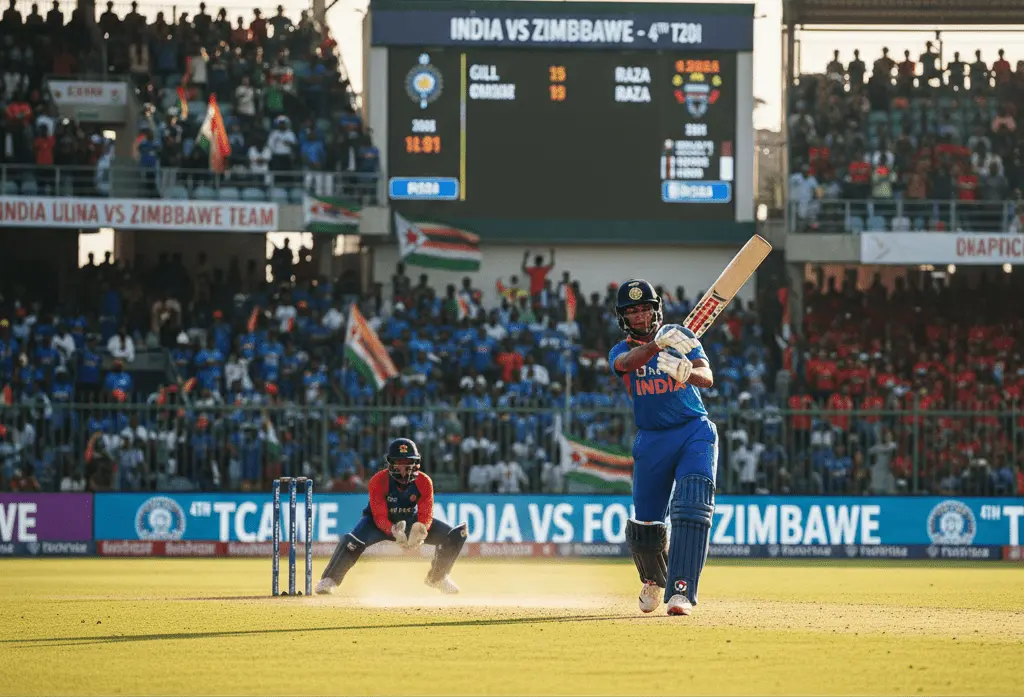
For Zimbabwe, matches against India have historically been opportunities to punch above their weight, earning them a reputation as “Giant-Killers.” For India in recent years, these contests offer a low-pressure environment to blood young talent fresh from the IPL, often under new leadership. This timeline explores how a rivalry born on cricket’s biggest stage transformed into a symbiotic fixture on the international calendar.
⚡ The 1980s: A World Cup Beginning and One Legendary Knock
The rivalry ignited on the grandest stage. India and Zimbabwe first met during the 1983 Prudential World Cup, a tournament that would change Indian cricket forever. In their first match of that campaign, India secured a comfortable win. However, their second meeting on June 18, 1983, in Tunbridge Wells, produced one of the most iconic innings in cricket history.
With India reeling at a disastrous 17 for 5, captain Kapil Dev walked to the crease. What followed was a breathtaking counter-attack: an unbeaten 175 runs from just 138 balls, featuring 16 fours and 6 sixes. This single-handed rescue act lifted India to 266/8, a total they successfully defended by 31 runs. This innings did more than just win a match; it fuelled the belief that led to India’s miraculous World Cup triumph that year, forever marking Zimbabwe’s role in a pivotal cricketing moment.
🌟 The 1990s: Zimbabwe’s Golden Generation and World Cup Shocks
The 1990s saw Zimbabwe emerge as a formidable force. After gaining Test status, they played their inaugural Test match against India in Harare in 1992. The decade was defined by Zimbabwe’s “Golden Generation,” featuring world-class players like the Flower brothers (Andy and Grant), captain Alistair Campbell, and the inspirational all-rounder Heath Streak.
This era peaked at the 1999 World Cup in Leicester. In a tense match, Zimbabwe defended 252. With India needing just 9 runs from the final two overs with three wickets in hand, captain Campbell threw the ball to Henry Olonga. In a stunning finale, Olonga took three wickets in the final over, sealing a dramatic 3-run victory for Zimbabwe and delivering one of the biggest upsets in World Cup history. This match cemented Zimbabwe’s “Giant-Killer” tag and remains their most famous win over India.
📈 The 2000s: Indian Consolidation and Zimbabwean Decline
The early 2000s saw India begin to assert consistent dominance in bilateral contests. Talents like Irfan Pathan announced themselves on the global stage; on India’s 2005 tour, Pathan decimated Zimbabwe with a 21-wicket haul in a two-Test series.
Despite India’s growing strength, Zimbabwe could still produce magical moments. In a 2002 ODI in Faridabad, Douglas Marillier played a bizarre and brilliant innings of **56* off just 24 balls**, using unorthodox scoop shots to steal a victory when all seemed lost. However, this period was overshadowed by the decline of Zimbabwean cricket due to profound administrative and political turmoil, which weakened their side considerably by the mid-2000s.
Read More: India national cricket team vs Pakistan national cricket team timeline
🧪 The 2010s: Zimbabwe as India’s Youth Testing Ground
With Zimbabwe no longer at its competitive peak, the dynamic of the rivalry shifted. India began using tours to Zimbabwe as a strategic platform to debut and test future stars. Players like KL Rahul and Ajinkya Rahane earned their first caps and scored maiden centuries on Zimbabwean soil.
Zimbabwe, however, reminded everyone of their threat. In a 2010 tri-nation series also involving Sri Lanka, a young Indian side was beaten twice by Zimbabwe, who advanced to the final at India’s expense. Even in 2016, during a T20I series, Zimbabwe managed to snatch a victory against an Indian team led by MS Dhoni, proving their capacity to challenge on their day.
🎯 The Modern Era (2020 – Present): New Stars and Competitive Spirit
The recent era has solidified the modern template: India tours Zimbabwe with a squad of promising youngsters, often led by a new captain. This was exemplified in the July 2024 T20I series.
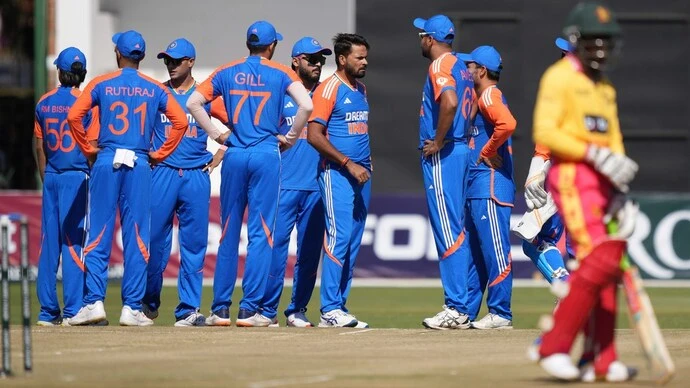
- Zimbabwe’s Shock Victory: In the first match, Zimbabwe shocked a young Indian team with a 13-run win, showcasing their enduring spirit.
- India’s Young Guns Respond: Under the captaincy of Shubman Gill, India bounced back to win the series 4-1. The tour was highlighted by Abhishek Sharma, who, in just his second international match, smashed a record-breaking maiden T20I century.
- Zimbabwe’s Fighting Spirit: Despite the series loss, Zimbabwe’s veterans, like captain Sikandar Raza, remained fiercely competitive, ensuring matches were far from one-sided.
The table below summarizes the head-to-head record between the two nations across all formats:
| Format | Total Matches | India Wins | Zimbabwe Wins | Tie/Draw/No Result |
|---|---|---|---|---|
| Test | 11 | 7 | 2 | 2 (Draws) |
| ODI | 66 | 54 | 10 | 2 (Ties) |
| T20I | 13 | 10 | 3 | 0 |
💡 Conclusion: A Rivalry Redefined
The India-Zimbabwe cricket timeline has traversed a remarkable path. It began with high-stakes World Cup drama, witnessed a period where Zimbabwe could regularly challenge a cricketing giant, and has now settled into a mutually beneficial arrangement.
For India, Zimbabwe tours are an invaluable talent incubator. For Zimbabwe, hosting a full-member nation like India provides essential financial support and competitive exposure, vital for the survival and growth of their cricket. While the contests may lack the historical tension of other rivalries, they remain rich with narrative—whether it’s a veteran Zimbabwean hero rolling back the years or a young Indian star using the stage to launch his career. It is a rivalry less about geopolitical tension and more about the pure, developmental spirit of the sport.

1 thought on “Zimbabwe National Cricket team vs India National Cricket team timeline”