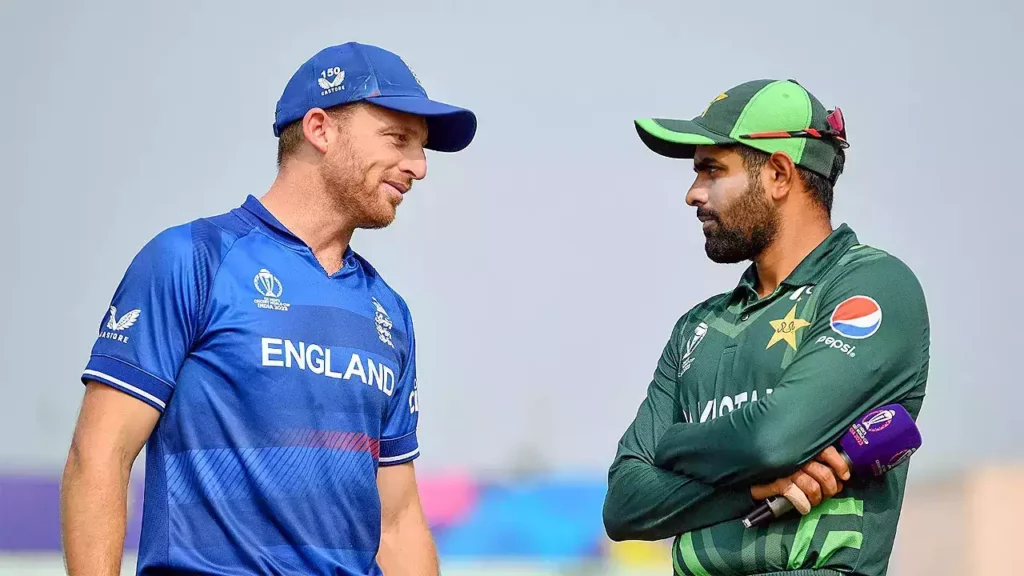
The cricket rivalry between Pakistan and England is a historical tapestry woven from dramatic upsets, tactical innovation, and a profound clash of cricketing cultures. Beginning just seven years after Pakistan’s independence, it has evolved from a fledgling nation’s bold statement to a modern-day battle between tradition and revolution. Famous for producing some of the most controversial and high-quality Test series, this contest remains a global highlight, pitting England’s modern, aggressive “Bazball” style against Pakistan’s enduring mastery of swing and spin.
The Formative Years (1954 – 1980s): Staking a Claim on Debut
The rivalry announced itself in spectacular fashion. On their inaugural tour of England in 1954, Pakistan, an unheralded and young side, achieved what no other nation had done before: winning a Test match on their first visit to the country. The stage for this historic moment was The Oval.
With the series poised, fast bowler Fazal Mahmood produced one of the great bowling performances, taking 12 wickets for 99 runs in the match (6/53 and 6/46) on a rain-affected pitch to bowl Pakistan to a thrilling victory. This win, which squared the series 1-1, was not just a result; it was a declaration of arrival that “doubled” interest in cricket back home and inspired a generation.
The rivalry’s character was cemented in the late 80s. In 1987, under the iconic leadership of Imran Khan, Pakistan secured its first-ever Test series win on English soil. This era also featured one of the most dominant individual bowling displays in the fixture’s history: leg-spin wizard Abdul Qadir’s legendary 9 for 56 in Lahore.
The 1990s: Peak Dominance and Global Glory
The 1990s represented Pakistan’s golden period against England, defined by pace and pinnacle success. The decade’s crowning moment came at the 1992 Cricket World Cup Final at the Melbourne Cricket Ground. Captained by Imran Khan, Pakistan defeated England to lift their first-ever World Cup trophy, a victory immortalized by a game-changing two-wicket burst from the legendary Wasim Akram.
This period also saw Pakistan introduce a terrifying new weapon to world cricket: reverse swing. The lethal pace duo of Wasim Akram and Waqar Younis mastered the art, leaving English batsmen utterly bewildered during the 1992 Test series and establishing a psychological hold that would last for years.
Also Read: Australian Men’s Cricket Team vs England Cricket Team Timeline
2000 – 2010: Intensity, Controversy, and Scandal
The new millennium brought fiercely contested cricket overshadowed by monumental controversy. England, riding high after their iconic 2005 Ashes win, toured Pakistan but were defeated 2-0 in a Test series that showcased Pakistan’s strength at home.
However, the rivalry became globally infamous for two incidents. The first was the 2006 Oval Test forfeit, where Pakistan, accused of ball-tampering, refused to take the field after tea. This led to the first forfeit in Test cricket’s 129-year history, with England awarded the win. An even darker chapter followed in 2010 at Lord’s. The spot-fixing scandal erupted, implicating Pakistani bowlers Mohammad Amir and Mohammad Asif, along with captain Salman Butt, in a conspiracy that shook cricket to its core.
2011 – 2019: Pakistani Resurgence and English Heartbreak
In the post-scandal era, Pakistan rebuilt with dignity under the calm leadership of Misbah-ul-Haq. Their redemption peaked during the 2012 series in the UAE, where they whitewashed England 3-0. Off-spinner Saeed Ajmal was unplayable, embodying Pakistan’s strategic dominance in Asian conditions.
Memorable moments continued to define the drama. In 2016, Pakistan drew a series 2-2 in England. After a memorable win at Lord’s, captain Misbah celebrated with iconic push-ups on the hallowed turf. Shortly after, Pakistan briefly became the world’s No. 1 ranked Test team. In white-ball cricket, Pakistan delivered another shock in the 2017 Champions Trophy semi-final in Cardiff, defeating the hosts on their way to ultimately winning the trophy.
2020 – Present: The Bazball Shock and the Spin Fightback
The latest era has been defined by a philosophical war. England, under coach Brendon “Baz” McCullum and captain Ben Stokes, unleashed “Bazball“—an ultra-aggressive, fearless approach to Test cricket focused on positive decision-making and rapid scoring rates. This revolution hit Pakistan hard in 2022, when England toured and swept the series 3-0, scoring at a breathtaking pace that broke historical records.
Pakistan, however, crafted a stunning response. After that defeat, captain Shan Masood committed to a “20-wicket masterplan,” focusing entirely on taking all opposition wickets to win matches. For the 2024-25 home series, Pakistan prepared extreme spin-friendly pitches. The strategy worked brilliantly: after losing a high-scoring first Test, spinners Sajid Khan and Noman Ali took 39 of the 40 English wickets across the next two matches, leading Pakistan to a 2-1 series victory.
Head-to-Head: The Statistical Record
The following table summarizes the competitive record between the two nations across all formats as of late 2025. Please note, some official records may vary slightly from the figures below:
| Format | Total Matches | Pakistan Won | England Won | Draw/No Result |
|---|---|---|---|---|
| Test | 92 | 23 | 30 | 39 |
| ODI | 92 | 32 | 57 | 3 |
| T20I | 31 | 9 | 21 | 1 |
Key Statistics & Notable Players:
- Leading Run-Scorer (Overall): England’s Harry Brook has scored 1,192 runs in the rivalry across formats.
- Leading Run-Scorer (ODIs): Pakistan’s Babar Azam (1,060 runs).
- Leading Wicket-Taker (Recent Tests): England’s Jack Leach (31 wickets).
Cultural Impact and The Future
This rivalry thrives on its extreme momentum swings, from Pakistan’s early triumph in 1954 to England’s Bazball blitz in 2022 and Pakistan’s spin-powered counterpunch in 2024. Celebrations like the “Naagin Dance” have added a fiery, theatrical edge to on-field contests, reflecting the passion of two of the world’s most devoted fan bases.
Looking ahead, the central dynamic is clear: England’s hyper-aggressive batting philosophy versus Pakistan’s strategic use of home conditions and spin wizardry. As both teams continue to evolve—England refining its high-risk approach and Pakistan expanding its “ways to win”—their encounters promise to remain at the forefront of cricket’s tactical evolution and pure, unscripted drama.
I hope this article provides a comprehensive timeline of this storied and ever-evolving rivalry. Would you be interested in a deeper analysis of a specific era, such as the strategic details of the 2024-25 spin battle or the cultural impact of the 1992 World Cup win?
